
Weddings are expensive primarily because they compress an unusual amount of skilled labor, coordination, and one-time-only risk into a single date that can't be rescheduled if something goes wrong. A corporate event has a bigger budget most of the time, but it also has more slack — more dates available, more tolerance for a vendor swap, more institutional buyers who negotiate professionally. A wedding has none of that. It has one date, one shot, and a client who is, almost by definition, planning something this significant for the first time.
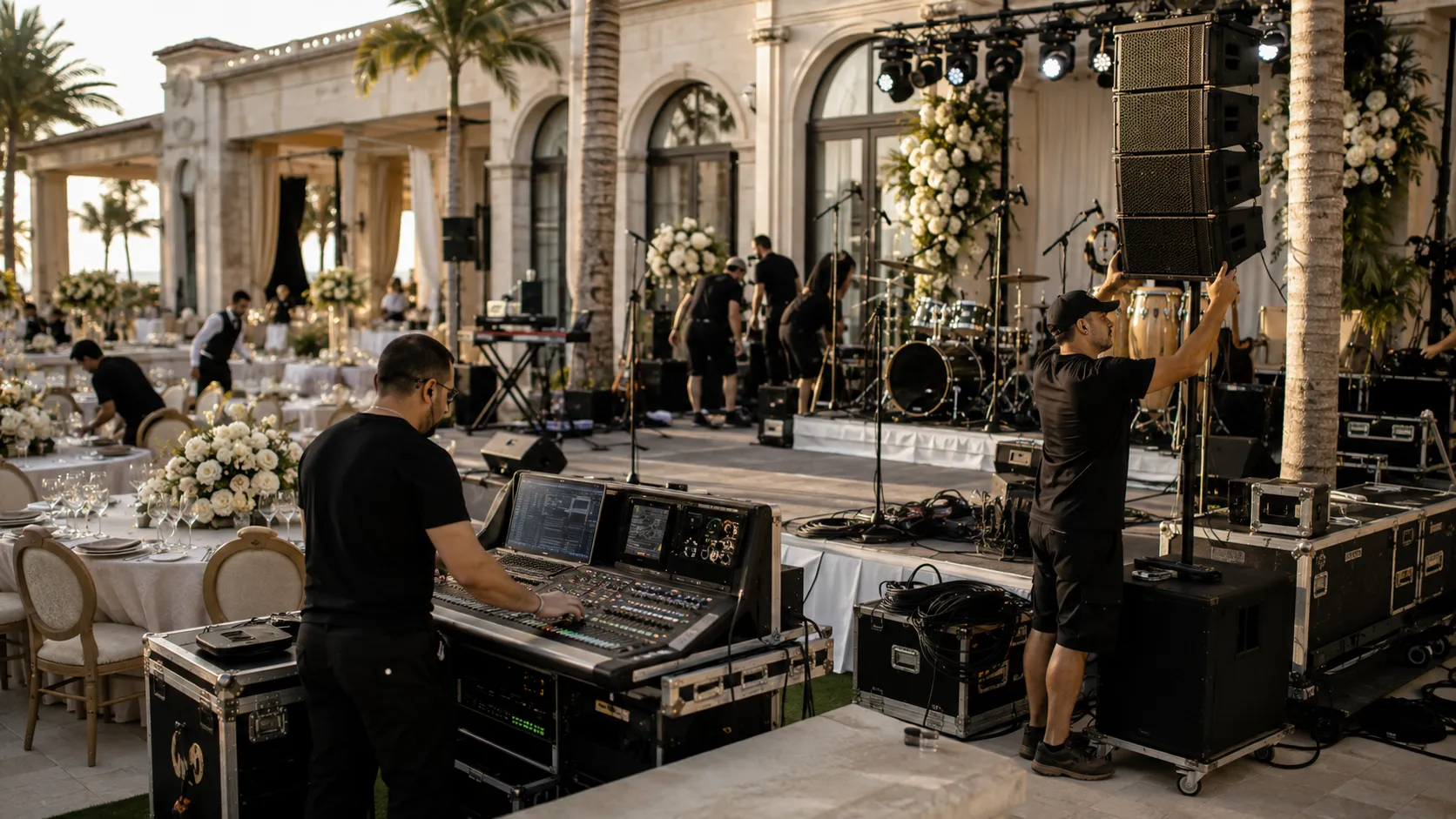
That combination changes the economics. Vendors price in the fact that failure isn't recoverable. They price in the fact that a Saturday in June can't be sold twice. And they price in the fact that the buyer, understandably, has less negotiating experience than a corporate procurement team does. None of that makes the price wrong. But it does mean "expensive relative to what" is a harder question than couples are usually given credit for asking.
There's also a risk factor that cuts the other way, one couples don't always think about: vendors are pricing in their own downside, not just the couple's experience. Wedding work is intensely word-of-mouth and review-driven, and a single serious mistake — even one that's genuinely no one's fault — can do outsized, lasting damage to a business that took years to build. A bad night at a corporate event is a bad night. A bad wedding can follow a vendor's reputation indefinitely, in a way that threatens the business itself. That asymmetry is baked into wedding pricing too, even if it's rarely said out loud. Failure simply isn't an option in the way it might be, at lower stakes, elsewhere.
There's a funny assumption I run into constantly, on a related note. When I tell people St. Royal does both weddings and corporate events, the default reaction is almost always some version of "oh, corporate pays more — companies always pay more." In practice, that's not how I price it, and it hasn't been for years. I don't charge a "wedding rate" and a separate "corporate rate." I charge what it actually costs to deliver a high-caliber, high-quality performance — full stop, regardless of who's signing the contract. That's a lesson from a career spent on the inside of this industry: as a musician, a band leader, a DJ, and for a stretch, running my own AV company, before founding St. Royal in Toronto in 2011, and now expanding across LA, Chicago, and Miami since 2023. The reputation and repeat business come from consistency, not from assuming one client type has deeper pockets than the other.
None of that fully answers the harder question sitting underneath it, though: whether the reasons behind wedding pricing are always the honest ones above, or whether something less honest is sometimes mixed in.
Sometimes, yes — and it's worth being direct about that rather than pretending it never happens. There is a well-documented pattern, often called the "wedding markup," where identical or near-identical services are priced higher once the word "wedding" enters the conversation. It happens for a mix of reasons that aren't all cynical: Saturday-in-June demand genuinely is higher than an average Tuesday, the stakes genuinely are higher, and vendors genuinely do build in a buffer for the added coordination a wedding requires compared to, say, a corporate happy hour.

But some of it is exactly what it looks like — charging more simply because the client is less likely to push back mid-planning, given how much is already committed by the time pricing conversations get uncomfortable. I won't pretend that motivation doesn't exist in parts of this industry. The honest answer to "why is this more expensive" should be answerable in specifics — more setup time, more coordination, a higher-demand date — not in vague appeals to "that's just what weddings cost."
Largely, no — but I don't want to wave off the part of that question that's real. The wedding industry is, for the most part, a normal service industry operating inside an emotionally loaded context, and that combination produces behavior that looks predatory even when it isn't. But "largely" is doing real work in that sentence. Genuine predatory and scam behavior does exist in pockets of this industry, and pretending otherwise wouldn't be honest.
Two things make weddings a distinct case among service industries, and both help explain why it can feel this way even when nothing dishonest is actually happening.
First, the barrier to entry is unusually low. Most professional services require licensing, capital, or credentials before someone can open for business. A wedding vendor often just needs a website, a portfolio, and a few completed gigs. That's not automatically a problem — plenty of excellent vendors started exactly that way, myself included — but it means the floor for who can call themselves a "wedding professional" is lower than in most industries couples are used to dealing with.
That low barrier compounds with something else: very few vendors in this space come in with any formal business or sales training. What passes for a sales process at a lot of small wedding businesses is whatever the owner picked up from watching sales content online, and that self-taught approach can tip into genuinely aggressive tactics without the vendor even recognizing it as manipulative. It's usually not organized bad faith. It's closer to the Wild West — nobody agreed on the rules because nobody was ever formally taught what the rules were.
Second, a large share of wedding vendors come from creative and artistic backgrounds — musicians, bakers, florists, designers, photographers. That's not incidental; it's the actual reason couples hire them. But the traits that make someone excellent at creative output are frequently not the same traits that make someone good at running a business. Contracts, cash flow, client communication, dispute resolution — that's a different skill set entirely, and this industry is, frankly, notoriously bad at that side of things. What often gets read as evasiveness, disorganization, or even bad faith is, more often than not, a genuinely talented creative person who never learned to run the business side of a business.
This is the throughline worth keeping in mind for everything that follows: where "well-intentioned but bad at business" ends, and something worse actually begins.
The clearest signal is whether a vendor can explain their pricing and their process in specific terms, without you having to extract it. A trustworthy vendor tells you what drives their cost, what could change it, and who exactly will be showing up — before you ask, not only after. An untrustworthy one gets vague at exactly the moment specificity would cost them the sale.

Here's a quick way to read what you're seeing:
Deposits and retainers. Vendors won't hold your date without one — that protects both sides, and it's standard everywhere, not just weddings.
Pricing that scales with scope. More hours, more people, or a different date tier will change your quote. That's the price reflecting what you're actually buying.
Demand-based pricing. Peak dates and peak seasons cost more. That's true of flights, hotels, and venues too.
Momentum once you've shown real interest. A vendor moving quickly to lock in your date after a great call is professional urgency, not a trick.
Price changes with no changed scope. If nothing about your event has changed, your price shouldn't either — ask what did.
Vague answers about who's actually showing up. You're entitled to a name or a specific role, not a shrug.
Undisclosed vendor relationships. If two vendors on a list you were given have a financial arrangement, you should be told upfront, not find out later.
Pressure that spikes specifically when you ask for time to think. Real urgency comes from real demand — not from your hesitation.
The difference isn't about tone. Plenty of trustworthy vendors are direct, even blunt. It's about whether the specifics hold up when you ask for them.
This is where the earlier distinction matters most. A disorganized, business-illiterate vendor and a dishonest one can look identical from the outside — both leave you confused, both make you feel like something's off — but they're not the same problem, and they don't deserve the same response.
Most of what feels aggressive in this industry is just sales, happening in a context where the buyer has more emotional weight riding on the decision than they've likely ever had in a purchase before. A follow-up call after a tour. A deposit deadline. A note that a date is getting interest from another couple. These are standard practices in any industry with limited, date-specific inventory — a wedding venue holding a Saturday isn't fundamentally different from a hotel holding a room block.

It actually crosses a line when the pressure is built on something untrue rather than something true. A fabricated competing offer is different from a real one. A "today only" price on a service that isn't actually time-sensitive is different from genuine seasonal demand pricing. An undisclosed financial relationship steering a recommendation is different from an honest one that's been disclosed upfront. In every case, the test is the same: is the vendor telling you something true and letting you decide, or manufacturing urgency to make the decision for you?
I'd also add one thing most industry commentary leaves out: couples aren't powerless in this dynamic, even when it feels that way in the moment. Asking a vendor to put a claim in writing, taking 24 hours before signing anything, and comparing notes with other vendors you're working with are all reasonable, normal parts of the process — not confrontations. A vendor who resists any of those requests is telling you something.
WPIC — the Wedding Planners Institute of Canada — sounds Canada-specific by name, but it isn't in practice: it has certified planners across dozens of countries, including throughout the US and the Caribbean. It's a professional certification and membership body for wedding and event planners, not a government regulator. It doesn't have legal authority over the industry the way a licensing board does for, say, real estate agents or financial advisors. What it does provide is a code of ethics that its certified members agree to operate under, including standards around disclosure of vendor relationships and referral arrangements.
For couples specifically looking for a US-based equivalent, the closest is the Association of Bridal Consultants (ABC), founded in 1955 and based in Connecticut — the oldest wedding professional organization in the country. ABC maintains its own member code of ethics, covering fair and honest dealing with clients, reasonable and transparent fee structures, and professional conduct standards. Like WPIC, it's a voluntary membership body rather than a government regulator, but membership signals the same thing: a planner who has opted into an external standard of conduct rather than operating with no accountability beyond their own word.
That distinction — voluntary standard, not legal mandate — matters on either side of the border. Asking whether your planner is certified, and by whom, is a fair and useful question regardless of market. It won't catch everything. But an industry with more of this kind of voluntary self-regulation would be a healthier one, and it's worth supporting the parts of it that already exist.
Both things are true at once. The wedding industry, as a whole, operates the way most service industries operate — with a mix of professionals who are straightforward and specific, and a smaller number who rely on vagueness and pressure because specificity wouldn't survive scrutiny. What makes it feel different is the setting: nobody plans a wedding twice, the stakes feel enormous, and every decision carries emotional weight a typical purchase doesn't. That combination makes normal commercial friction — and even normal creative-person disorganization — feel like something worse than it usually is.
The way through it isn't suspicion of every vendor you talk to. It's the same thing that makes any high-stakes purchase go well: ask specific questions, expect specific answers, and treat vagueness — not directness — as the actual warning sign.
We've built St. Royal on the belief that specificity builds trust faster than reassurance does. Every claim in this post is one I'd stand behind in a conversation with any couple, planner, or venue we work with — that's the standard we try to hold ourselves to, not just the standard we ask other vendors to meet.
This post is part of a series where we're being direct about how this industry actually works, including the parts that are uncomfortable to talk about. If you're navigating a vendor decision right now and want a second, more experienced set of eyes on it, we're happy to talk it through — no pitch required.
---
- Why does wedding AV cost so much — and what are you actually paying for?
- Questions every couple should ask their wedding vendors before signing
- What does "preferred vendor" actually mean at a wedding venue?
- Wedding kickbacks explained: planners, venues, and the referral fees most couples don't know about — coming soon

Andrew St. Royal is the founder and creative director of St. Royal Entertainment. A former professional musician, Andrew has been instrumental in thousands of events, bringing his expertise as a musician, band leader, agent, music designer, and event producer to every experience. His deep understanding of live entertainment and event production allows him to create unforgettable, strategically curated music programs for high-end venues and luxury events.
Weddings compress an unusual amount of skilled labor, coordination, and one-time-only risk into a single date that can't be rescheduled. Vendors price in the fact that failure isn't recoverable, that peak dates can't be resold, and that couples typically have less negotiating experience than corporate buyers — all of which raises cost without any dishonesty involved.
Largely, no. Most of what looks predatory is a normal service industry operating in an unusually emotional context, often made worse by vendors with low barriers to entry and little formal business training. That said, genuine predatory behavior does exist in pockets of the industry, and vagueness about pricing or process — rather than directness — is the real warning sign to watch for.
The clearest signal is whether a vendor can explain their pricing and process in specific terms without being pressed — what drives the cost, what could change it, and who's actually showing up. Vague answers, price changes with no changed scope, or pressure that spikes when you ask for time to think are all worth a second look.
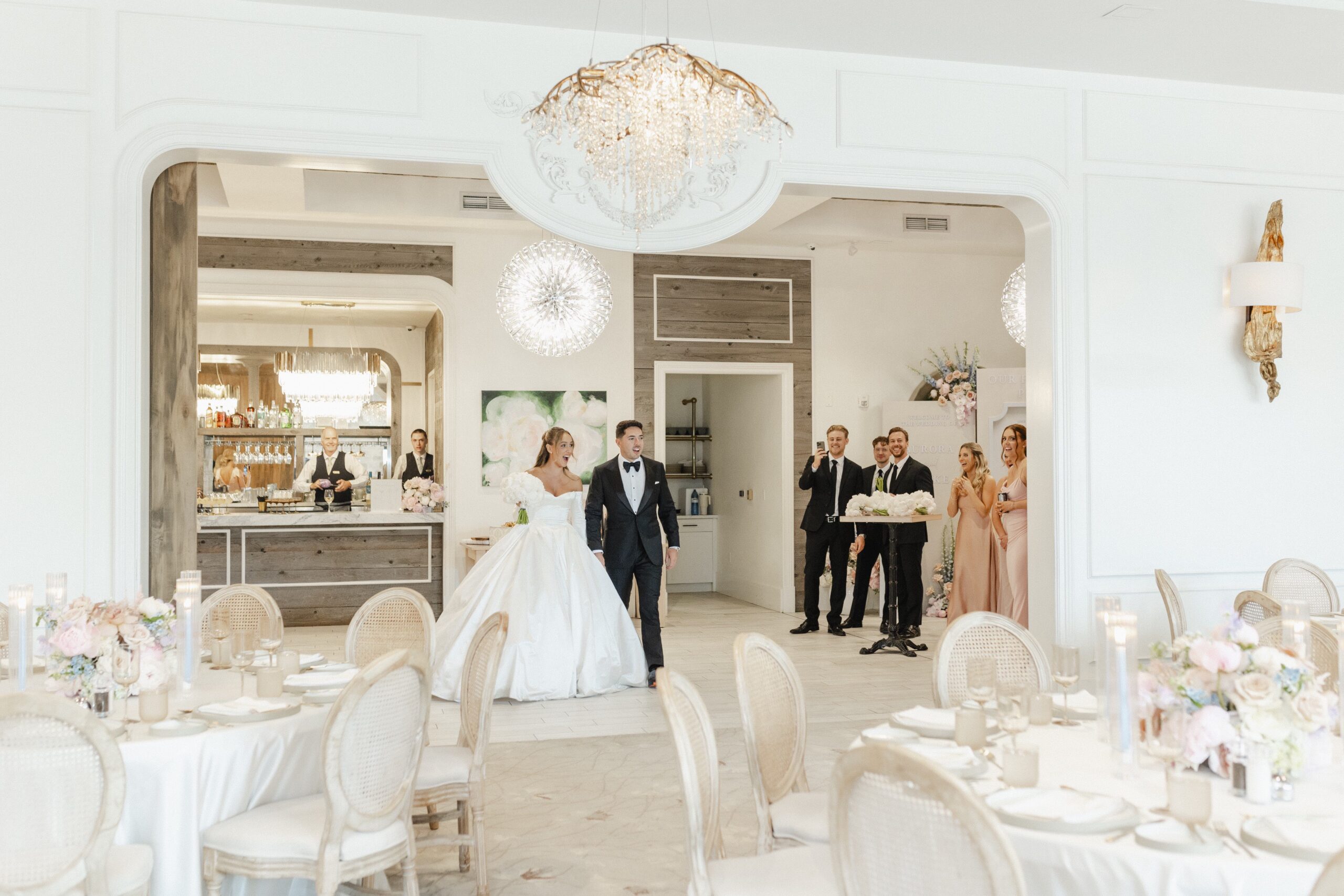
Aurora Lovestrand’s Elegant Pastel Wedding at Elora Mill
Strings
DJ
AV Production

St. Royal is featured in the #2 Wedding in Toronto Life Magazine's most popular Real Weddings of 2023!
Party Band
DJ
AV Production
Jazz Band